Scaling a business is usually a trap.
You think more revenue means more freedom. But usually, it just means more emails. More Slack pings. More "quick calls" that kill your afternoon.
If your business grows and your stress grows with it, you aren't scaling. You're just building a bigger cage.
I’ve been there. I know the feeling of watching the bank account grow while your sleep schedule shrinks. It’s a bad trade.
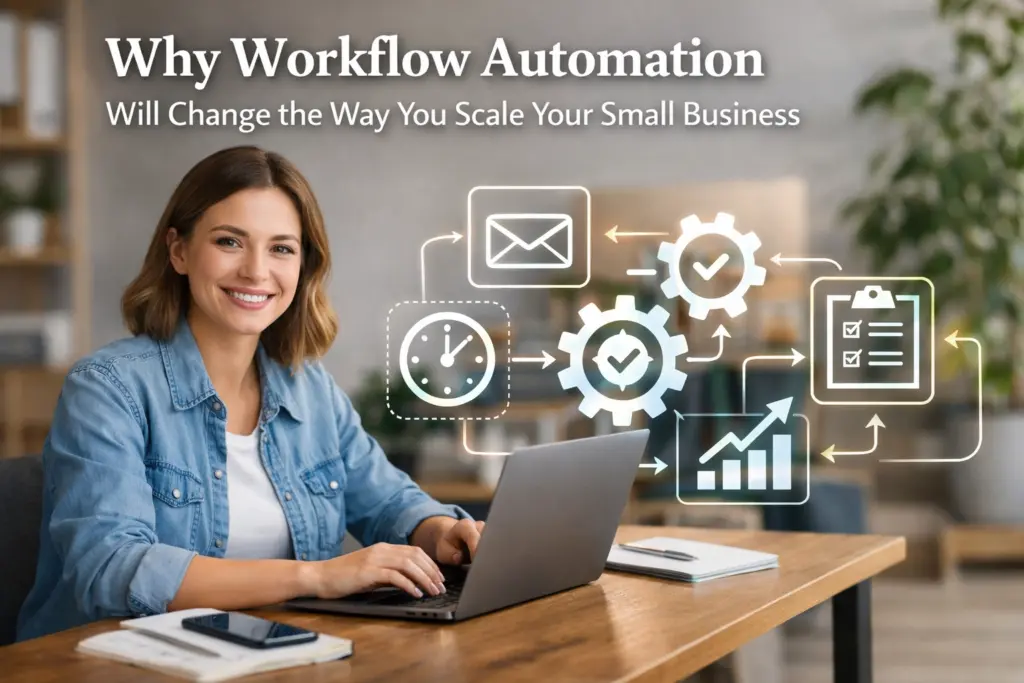
The secret to breaking that cycle is workflow automation for small business.
Most founders think automation is just for the "big guys." They think it’s too expensive or too technical.
Not at all.
In fact, if you don’t automate, you’ll never become a "big guy." You’ll stay stuck in the weeds of your own operations.
Today, we’re breaking down why workflow automation is the ultimate growth lever for Orbit Business and how you can implement it right now.
The Reality of the Scaling Wall
When you start out, you do everything.
You handle the lead generation funnel. You do the crm setup. You send the invoices. You even handle the automated follow up (which isn't actually automated yet, it's just you frantically typing at 10 PM).
This works for a while. It’s "hustle."
But then you hit the wall.
Research shows that employees in small businesses often spend over 15 hours a week on repetitive busywork. That’s nearly two full days of lost productivity every single week.
As you scale, that "busywork" grows.
If you have 10 clients, you can manage them manually. If you have 100? You’re dead.
Business automation acts as your digital workforce. It handles the boring stuff so you can handle the strategy.

1. Marketing Automation: The Heart of Lead Gen
Since it’s Wednesday, let’s talk marketing.
Scaling requires a predictable stream of new business. You can’t rely on referrals forever. You need a sales funnel strategy that works while you sleep.
Marketing automation is how you turn a stranger into a lead without lifting a finger.
A proper lead generation funnel should:
- Capture the visitor's info.
- Tag them in your CRM.
- Deliver a lead magnet immediately.
- Start a nurture sequence.
If you are manually emailing every person who downloads a PDF, you are wasting time.
By setting up a solid sales funnel, you ensure that no lead falls through the cracks. You’re building a system that sells 24/7.
If you're just starting to think about your strategy, check out the Marketing Foundations Course. It covers the basics you need to get these systems off the ground.
2. CRM Setup: Your Central Nervous System
Your CRM is not just a digital Rolodex.
If you’re just using it to store names and phone numbers, you’re missing the point. A high-level crm setup is the foundation of all workflow automation.
A good CRM should trigger actions based on behavior.
- Did a lead click a link in your email? Automate a task for a salesperson to call them.
- Did a deal move to the "Proposal Sent" stage? Automate a follow up for three days later.
- Did a client sign a contract? Trigger the client onboarding automation immediately.
CRM automation eliminates the "I forgot to follow up" excuse.
It creates a consistent experience for every single prospect. When your systems are tight, your brand looks professional. When they’re messy, you look like a hobbyist.

3. Client Onboarding Automation: The First Impression
The most dangerous time in a client relationship is the first 24 hours after they pay you.
They have "buyer’s remorse." They’re nervous. They want to know they made the right choice.
If they pay you on a Friday and don't hear from you until Tuesday, they’re already looking for the exit.
Client onboarding automation fixes this.
The moment the payment clears, the system should:
- Send a "Welcome" email.
- Provide a link to a kick-off form.
- Grant access to their portal or shared drive.
- Schedule the kick-off call.
I’ve seen this save founders 5–10 hours a week alone. More importantly, it makes the client feel cared for instantly.
You can’t scale high-touch onboarding manually. You’ll eventually drop the ball. Automate the process so you can focus on the relationship, not the paperwork.
4. The Power of the Automated Follow Up
Money is made in the follow-up.
Most small businesses stop after the first or second contact. They think they’re "annoying" the lead.
In reality, people are just busy.
An automated follow up sequence takes the emotion out of sales. It doesn't get tired. It doesn't feel awkward. It just does its job.
I’ve written before about why founders who automate sleep better. This is why. You know the machine is working.

How to Start (Without Losing Your Mind)
You don’t need to automate everything at once. In fact, you shouldn't.
I recommend the "P.A.R." method:
- Process: Map out the steps manually first.
- Analyze: Identify the repetitive parts.
- Replace: Use a tool to automate that specific step.
Start with your biggest bottleneck.
Is it lead capture? Build a sales funnel.
Is it data entry? Work on your crm setup.
Is it messy handovers? Focus on client onboarding automation.
If you want to see what's working in 2026, take a look at my breakdown of what to automate and what to avoid.
Real-Time Visibility: Making Better Decisions
One "hidden" benefit of automation is data.
When your workflows are automated, they leave a digital trail. You can see exactly where people are dropping out of your sales funnel strategy.
- Is the conversion rate low on the first email? Change the subject line.
- Are people getting stuck in the onboarding phase? Simplify the form.
Without automation, you're guessing. With it, you're a scientist.
You get real-time dashboards that show you the health of your business. This visibility is what allows you to make proactive decisions instead of constantly putting out fires.

FAQ: Common Concerns
"Won't automation make my business feel cold?"
Not at all. Automation handles the "robotic" tasks so you have more energy to be human. Personalized videos and hand-written notes are much easier to do when you aren't stuck doing manual data entry.
"Is it too expensive?"
Think of it as an investment. If an automation saves you 10 hours a month, what is your hourly rate? Usually, the system pays for itself in the first week.
"What if the tech breaks?"
Everything breaks eventually. But a well-built system is more reliable than a tired human. We build redundancies into every crm setup we do at Orbit Business.
My Take: The Automation Mindset
Scaling isn't about working harder. It’s about building a machine that works for you.
I see too many founders wearing "busy" as a badge of honor. It isn't. It's a sign of a broken system.
If you want to scale Orbit Business, you have to stop being the engine and start being the pilot.
Automation is the wind beneath your wings. (Okay, that was a bit cheesy, but you get the point.)
My advice? Pick one thing this week. One repetitive task that makes you sigh when you see it on your to-do list.
Automate it.
See how it feels. Once you get a taste of that reclaimed time, you’ll never go back to the manual grind.
If you're feeling overwhelmed, I've written an entire guide on how to stop micromanaging and start scaling. Give it a read.
Ready to get your systems in order? Contact us here to see how we can help you build your digital workforce.
Let's get to work.
( Patric)
We help service-based businesses grow with proven strategies:
- Learn Marketing & SEO Strategies → itspatricb.com
- Work With a Marketing Agency in Dubai → camouflage-media.com
- Use an All-in-One CRM for Service Businesses → orbit-business.com