Scaling a business is a double-edged sword. You want more clients, more revenue, and more impact: but usually, that comes with more headaches. More emails. More manual data entry. More "did we send that invoice?" moments.
I’ve seen it a thousand times. A founder hits a growth spurt, tries to brute-force the work, and ends up burnt out by 2 PM.
The fix isn't working harder. It’s workflow automation for small business.
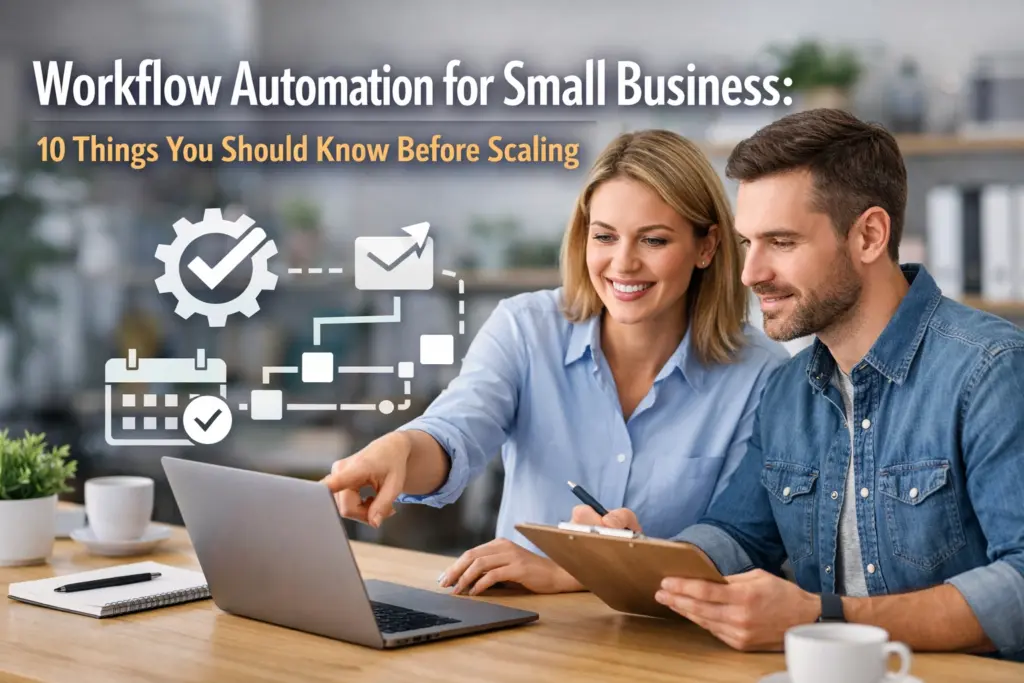
If you’re planning to scale in 2026, you can’t just "wing it" with your processes. You need a system that works while you sleep. Here are 10 things you absolutely need to know before you pull the trigger on scaling.
1. Automation is Your New "Silent Partner"
Most founders think automation is just about "tech stuff." It’s not. It’s about buying back your time.
Every minute you spend moving a lead from a spreadsheet to your email tool is a minute you aren't closing deals. Business automation eliminates the repetitive junk that kills your momentum. Think of it as a silent partner who never sleeps, never complains, and never misses a deadline.
When you automate, you're not just saving time: you're building a foundation. You can’t build a skyscraper on a swamp. Automation is the concrete.
2. Your CRM Setup is the Foundation
If your CRM is just a digital Rolodex, you’re doing it wrong. A proper crm setup is the heart of your scaling strategy.
It should handle the heavy lifting:
- Tagging leads based on behavior.
- Moving deals through stages automatically.
- Notifying your sales team when a hot lead clicks a link.
Without crm automation, your data stays siloed. You won’t know who to call or when to follow up. I always tell my clients: if it’s not in the CRM, it didn’t happen. Get your CRM right before you try to pour more leads into the top of the funnel.
3. Scalability Doesn't Require a Massive Headcount
In the old days, more work meant more employees. Not anymore.
With workflow automation for small business, you can 2x or 3x your output without hiring a single person. Automated workflows handle the volume. Whether you have 10 leads or 1,000, the system processes them the same way.
This is how small teams at Orbit Business out-compete much larger agencies. They aren't smarter; they just have better robots. You eliminate the operational bottlenecks that usually force you into a premature (and expensive) hiring spree.
4. The Magic is in the Automated Follow Up
Most money is lost in the gaps. A lead comes in, you’re busy, you forget to reply, and they go to your competitor.
An automated follow up system ensures that no lead ever falls through the cracks. Ever.
You can set up sequences that:
- Send a text immediately after a form submission.
- Email them a case study 24 hours later.
- Ping you on Slack if they haven't booked a call after three days.
It’s about being persistent without being annoying. And because it’s automated, it’s consistent. Consistency wins every time.
5. You Need a Bulletproof Sales Funnel Strategy
You can’t just "automate" a mess. You need a clear sales funnel strategy first.
What happens the moment a stranger sees your ad? Where do they go? What’s the goal?
- Top of Funnel: Awareness (Lead generation funnel).
- Middle of Funnel: Trust (Education and Nurture).
- Bottom of Funnel: Conversion (The Sale).
If you don't map this out, your marketing automation will just send the wrong messages to the wrong people faster. I’ve written about this before: you need to know what to automate and what to avoid to stay human while scaling.
6. Client Onboarding Automation is a Game Changer
The "honeymoon phase" with a new client is critical. If your onboarding is slow and manual, you’re already losing their trust.
Client onboarding automation makes you look like a pro.
- Contract gets signed.
- Invoice is sent automatically.
- Welcome kit and intake form are emailed instantly.
- Project folder is created in your drive.
All of this happens while you’re having lunch. It sets the tone for the entire relationship. It says, "We have our act together."

7. Accuracy Goes Up, Stress Goes Down
Human error is expensive. A typo in an invoice or a forgotten meeting can cost you thousands.
Automated workflows don't get tired. They don't have "off days." By removing manual data entry, you significantly reduce the risk of errors. This leads to higher accuracy in your reporting and, more importantly, a lot less stress for you.
When you trust your systems, you stop micromanaging. If you're struggling to let go, check out my thoughts on the automation mindset.
8. Connect Your Apps for Real Data Insights
If your marketing tools don't talk to your sales tools, you’re flying blind.
True business automation connects your entire stack. Your lead generation funnel should feed directly into your CRM, which should talk to your accounting software.
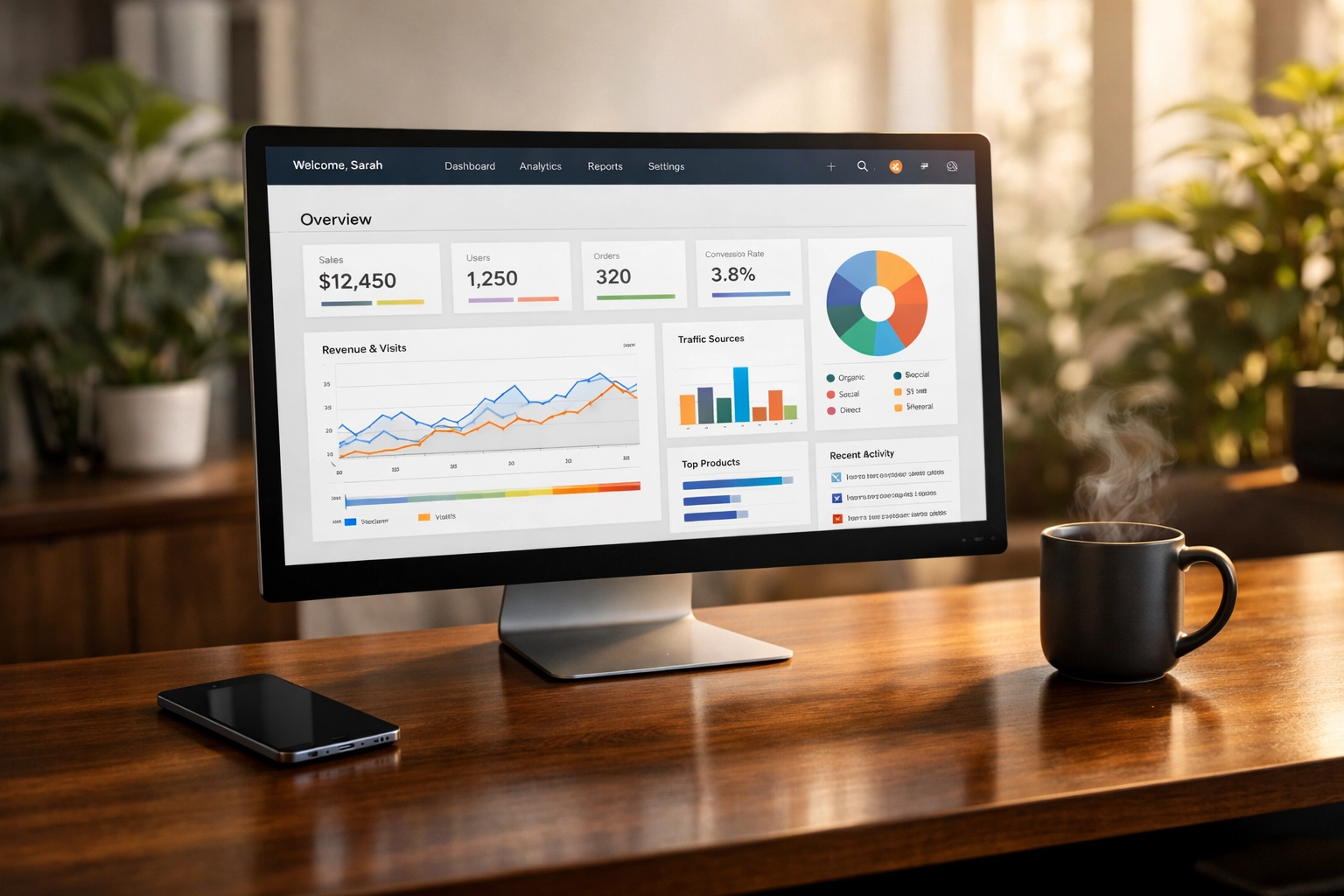
When these systems are integrated, you get real-time insights. You can see exactly which marketing spend is resulting in actual profit. No more guessing. No more messy spreadsheets. Just clear, actionable data.
9. Marketing Automation Isn't "Set and Forget"
A common mistake? Setting up a sales funnel and never looking at it again.
Marketing automation requires optimization. You need to check your open rates. You need to A/B test your landing pages. The automation handles the execution, but you still need to provide the strategy.
Think of it like a high-performance car. The engine (automation) does the work, but you still have to steer.
10. Start Small, Then Explode
Don't try to automate your entire business in a weekend. You’ll break everything.
Start with one repetitive task. Maybe it’s your meeting scheduling or your initial lead response. Once that works perfectly, move to the next thing.
This incremental approach is how you build a robust system that can actually handle scaling. If you try to do everything at once, you’ll end up with a "Frankenstein" system that’s harder to manage than the manual work was.
Common Questions About Workflow Automation
Is automation expensive for small businesses?
Not at all. Most tools have "prosumer" tiers that are very affordable. The cost of not automating: lost leads, wasted time, and hiring too early: is much higher.
Will automation make my business feel robotic?
Only if you let it. Use automation to handle the "robotic" tasks (data entry, scheduling) so you have more time for "human" tasks (strategy, relationship building).
Do I need to be a coder?
No. Tools like Zapier, Make, and modern CRMs are designed for people who don't code. It’s about logic, not syntax.

My Take: Why You Can’t Afford to Wait
I’ve spent years helping founders fix their back-office mess. The biggest difference between those who scale and those who plateau is their automation mindset.
The founders who "make it" understand that their time is their most valuable asset. They don't spend it on $15/hour tasks. They build systems at Orbit Business that allow them to focus on the $1,000/hour decisions.
If you want to grow, you have to let go of the manual work. It’s scary at first, but it’s the only way to reach the next level. Plus, founders who automate sleep better and make more money. That’s a fact.
Ready to Level Up Your Workflow?
Stop doing everything yourself. If you're ready to stop the manual grind and start scaling with a professional crm setup and sales funnel strategy, let's talk.
- Audit your current mess: Look at your daily tasks. What can a robot do?
- Pick one tool: Start with a solid CRM or an automation platform.
- Get expert help: Don't waste weeks trying to figure it out yourself.
Book a strategy call with me here and let’s build a business that works for you, not the other way around.
Stay direct, stay automated.
( Patric)
We help service-based businesses grow with proven strategies:
- Learn Marketing & SEO Strategies → itspatricb.com
- Work With a Marketing Agency in Dubai → camouflage-media.com
- Use an All-in-One CRM for Service Businesses → orbit-business.com